
Trump says Putin will not attack Ukrainian cities amid cold week
/ By Madison Carter
Trump says Putin will not attack Ukrainian cities amid cold week
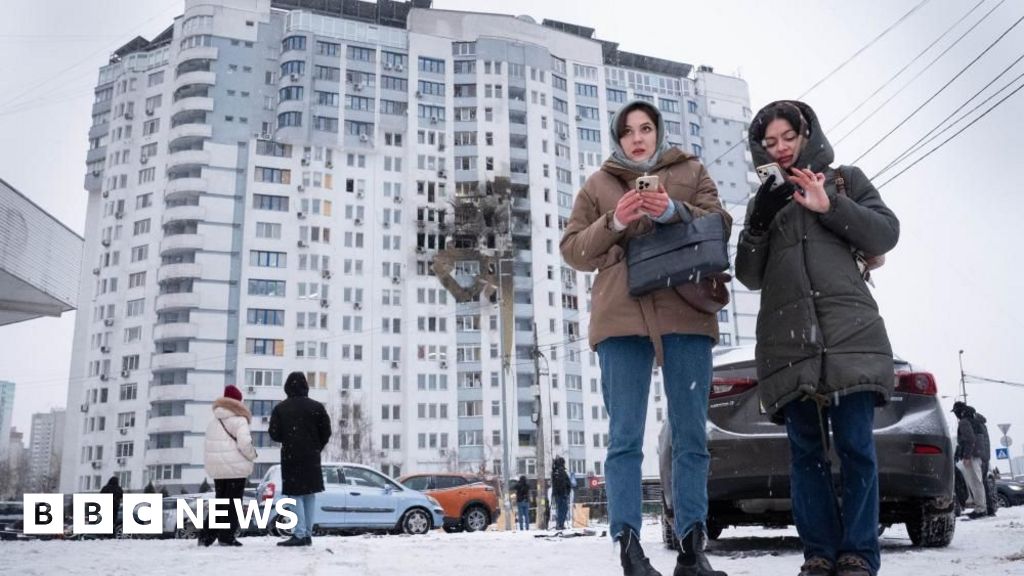
US President Donald Trump said Russia's Vladimir Putin had agreed to refrain from any attack on Ukraine's capital, Kyiv, and other cities and towns for one week because of “extraordinary cold” weather.
Russia has not confirmed any such agreement, yet Ukraine's President Volodymyr Zelensky welcomed Trump's announcement and said he expected Moscow to keep its promise.
Later on Thursday, Zelensky wrote on social media that Trump had made an “important statement” about “the possibility of providing security for Kyiv and other Ukrainian cities during this extreme winter period.”
He added that their teams had discussed the issue in the United Arab Emirates (UAE) and said, “We expect the agreements to be implemented.”
The BBC understands that Ukraine has agreed to mirror Moscow's actions—pausing its own attacks on Russian oil refineries in response.
Last week, negotiators from Russia, Ukraine and the US met in the UAE for the first trilateral talks since the war began.
All sides described the meeting as constructive, but there has been no announcement that Russia agreed to pause its attacks for the length of the extreme cold currently gripping the region.
Speaking at a televised cabinet meeting in Washington DC, the US President said he had “personally asked President Putin not to fire into Kyiv and the various towns for a week,” and that Putin “agreed to do that.”
Trump added: “It was very nice. A lot of people said, ‘Don't waste the call, you're not going to get that.’ And he [Putin] did it.”
He said Ukrainians “almost didn't believe it, but they were very happy about it because they are struggling badly.”
Trump did not specify when the pause would begin, but in Kyiv temperatures are forecast to plunge from Thursday night, reaching -24C (-11F) in the coming days.
During the harsh winter, Russia has intensified attacks on Ukraine's energy infrastructure, following a pattern seen during cold spells since the full-scale invasion began in 2022.
Instead, attacks have continued, crippling the power supply to major Ukrainian cities and leaving millions without heating or electricity.
Power companies carry out round-the-clock repairs, but their work can be rapidly undone by Russian air attacks.
Even when electricity is restored, the supply often lasts only a few hours—enough to charge appliances but not to substantially warm homes.
Russia has not confirmed any such agreement, yet Ukraine's President Volodymyr Zelensky welcomed Trump's announcement and said he expected Moscow to keep its promise.
Later on Thursday, Zelensky wrote on social media that Trump had made an “important statement” about “the possibility of providing security for Kyiv and other Ukrainian cities during this extreme winter period.”
He added that their teams had discussed the issue in the United Arab Emirates (UAE) and said, “We expect the agreements to be implemented.”
The BBC understands that Ukraine has agreed to mirror Moscow's actions—pausing its own attacks on Russian oil refineries in response.
Last week, negotiators from Russia, Ukraine and the US met in the UAE for the first trilateral talks since the war began.
All sides described the meeting as constructive, but there has been no announcement that Russia agreed to pause its attacks for the length of the extreme cold currently gripping the region.
Speaking at a televised cabinet meeting in Washington DC, the US President said he had “personally asked President Putin not to fire into Kyiv and the various towns for a week,” and that Putin “agreed to do that.”
Trump added: “It was very nice. A lot of people said, ‘Don't waste the call, you're not going to get that.’ And he [Putin] did it.”
He said Ukrainians “almost didn't believe it, but they were very happy about it because they are struggling badly.”
Trump did not specify when the pause would begin, but in Kyiv temperatures are forecast to plunge from Thursday night, reaching -24C (-11F) in the coming days.
During the harsh winter, Russia has intensified attacks on Ukraine's energy infrastructure, following a pattern seen during cold spells since the full-scale invasion began in 2022.
Instead, attacks have continued, crippling the power supply to major Ukrainian cities and leaving millions without heating or electricity.
Power companies carry out round-the-clock repairs, but their work can be rapidly undone by Russian air attacks.
Even when electricity is restored, the supply often lasts only a few hours—enough to charge appliances but not to substantially warm homes.